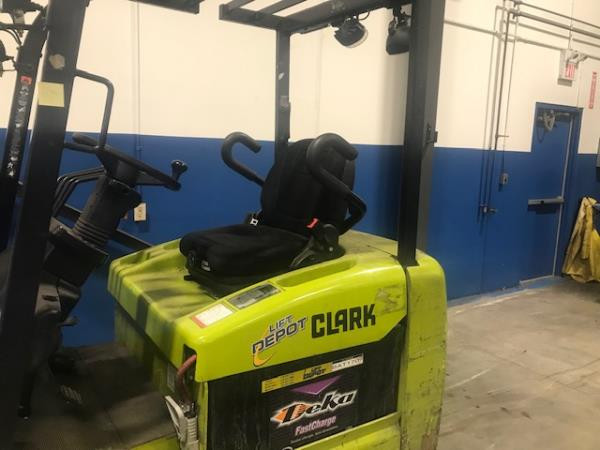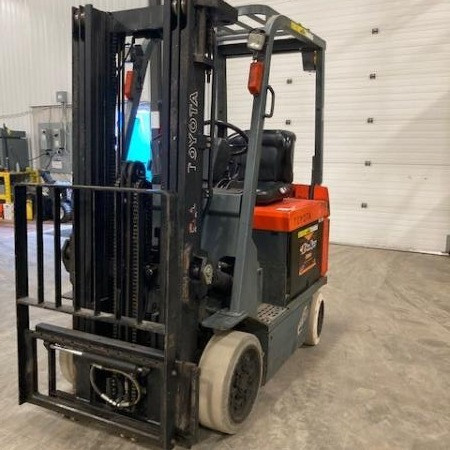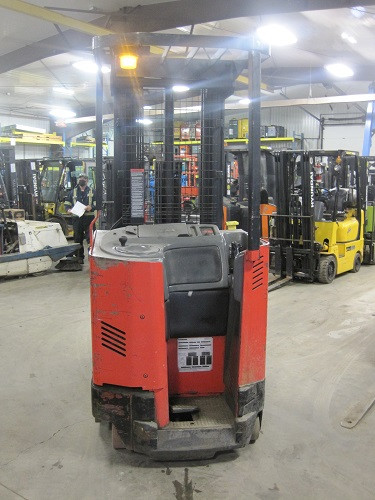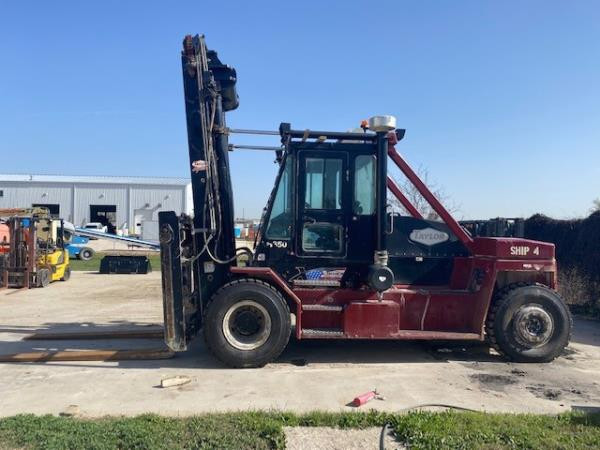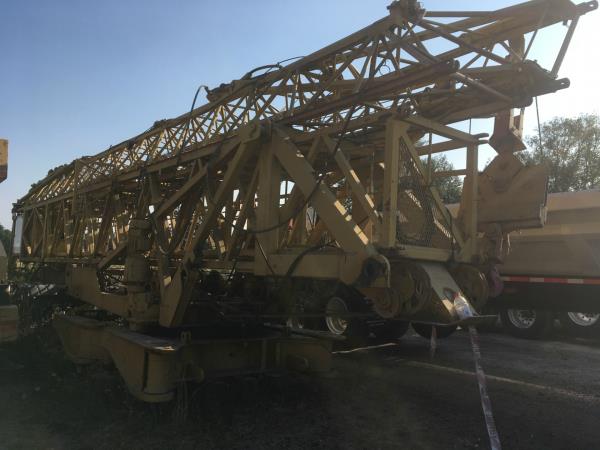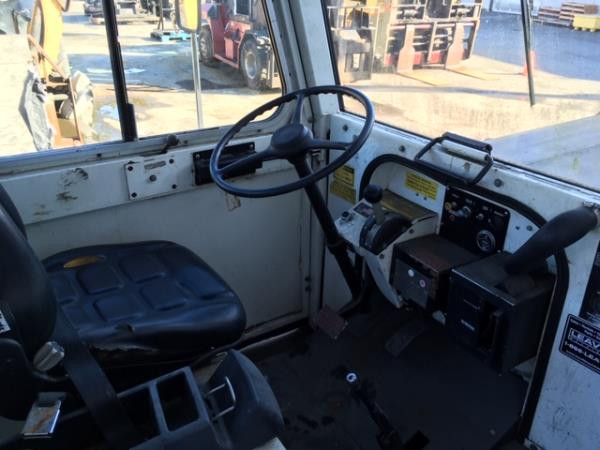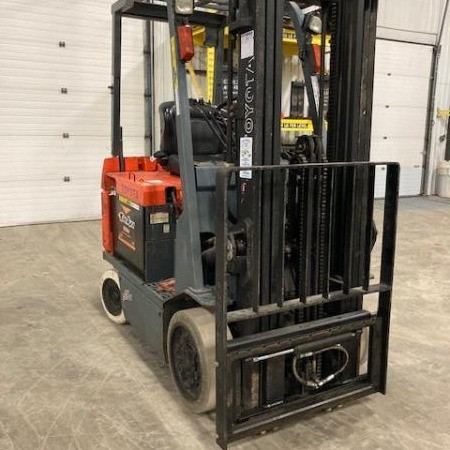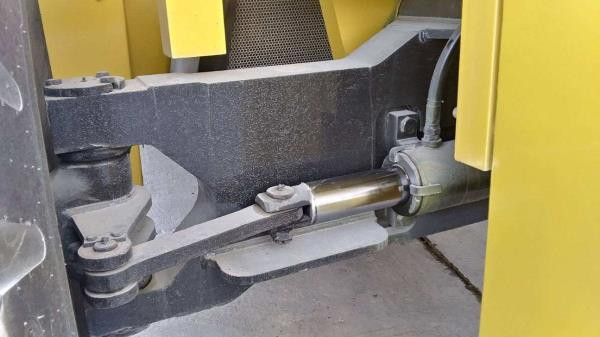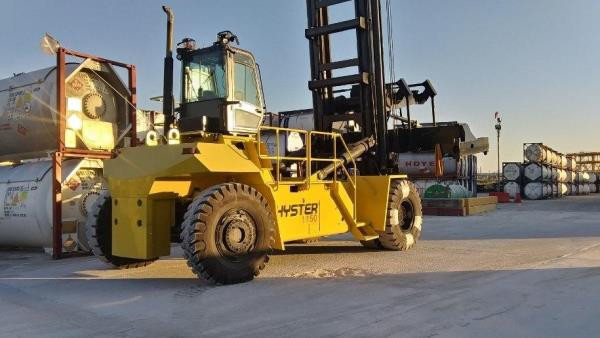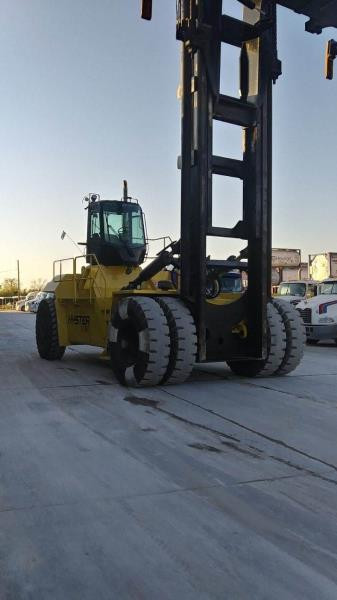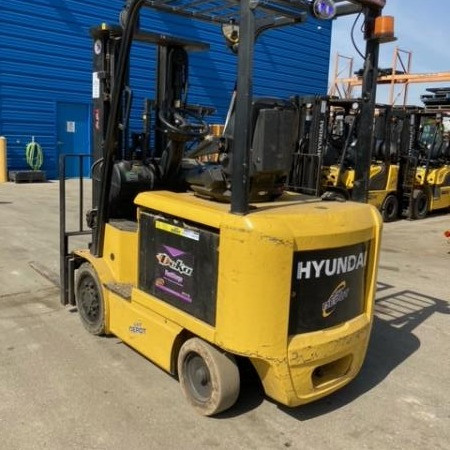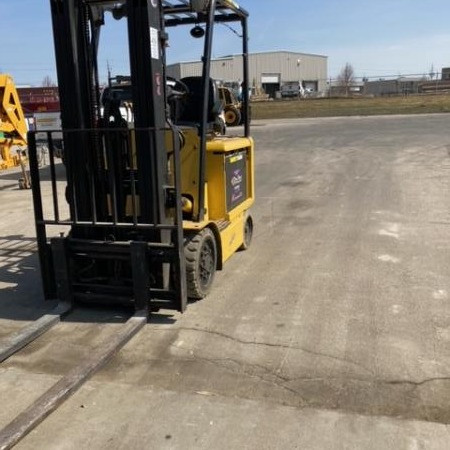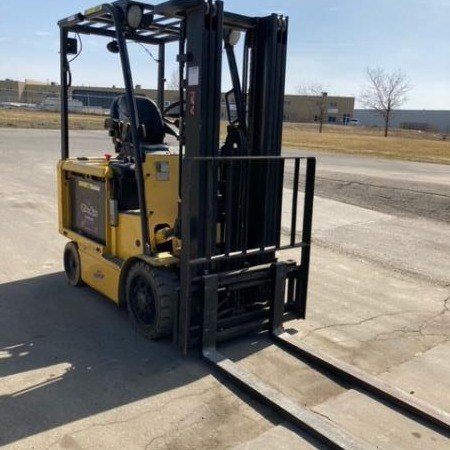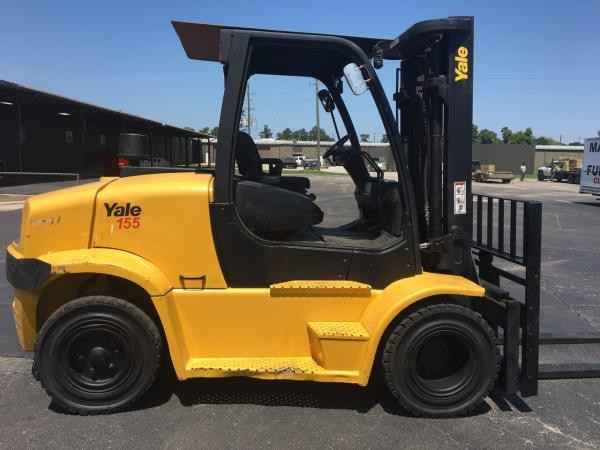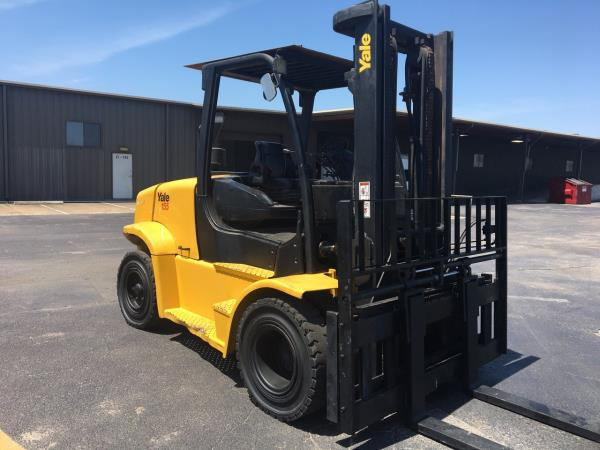

Used Forklifts Vallejo - There are some advantages and disadvantages to both electric and internal combustion (IC) trucks. Electric engines need a lot less maintenance, and hence they cost less to maintain during their life span. The battery should last at least five years if the manufacturer's charging and maintenance guidelines are followed. Overnight charging expenses are generally low. Electric trucks tend to be compact units and highly maneuverable, especially the three-wheel models. Drive, tilt, lift, auxiliary and acceleration speeds are adaptable and could be changed depending on the application and the driver's preferences. Electric trucks are easier on the natural environment and are not noisy. Not suitable to be used in wet conditions are electric trucks. Because of the need for battery recharging, they cannot be constantly utilized. They are not suitable on rough terrain. The energy consumption is high on ramp work and continuous high lifts. IC engine diesel/LPG has the advantage of being suitable for continuous outdoor application and uneven surfaces. With no need for battery charging, the forklift could be used during the evening and overnight. Supply and transport of fuel should be factored into costs. Initial costs are less than for an electric truck, but long term costs related to maintenance and fuel are higher. IC engines have larger capacities than electric, but less adaptability. LPG can be used in some indoor applications. IC Engine diesel/LPG makes higher emissions and more noise compared to electric. LPG has lower emissions than diesel. A forklift operator certification that covers both classroom study and practical evaluations is required by the Occupational Safety and Health Administration or OSHA. The three-year certification is not transferable; if switching employers, operators must become recertified. one thousand eight hundred kilograms to two thousand two hundred kilograms is the load capacity of a conventional forklift. Higher load capacities up to and beyond 9,000 kilograms are available in some units. The load capacity of a forklift depends on the unit and its attachments and options. Since 1986, Caterpillar has grown to be a household name in the manufacturing of construction and mining equipment, industrial gas turbines, diesel-electric locomotives, diesel engines and natural gas engines. Caterpillar has many products which are sold under various brand names including: CAT, Caterpillar, MAK, EMD, MWM, Solar Turbines, SEM, Progress Rail, Perkins and FG Wilson. Caterpillar specializes in numerous industries including Construction, Energy & Transportation, Resource Industries and financial products, along with a variety of operating segments. The majority of the fleet is organized by having a vast network of dealerships that serve 190 countries internationally. In the U.S., Toyota Materials Handling inc., or TMHU, continues to be the best selling lift truck dealer since 1992. Proudly celebrating more than 40 years of operations, the Irvine, California situated business offers a complete line of quality lift vehicles. Owing to their status of excellence, reliability, and durability, Toyota remains popular in this competitive market. Quality is the foundation of Toyota’s notorious Toyota Production System practiced at all manufacturing facilities, including TIEM, which is stands for Toyota Industrial Equipment Manufacturing, situated in Columbus, Indiana. The bulk of the Toyota lift trucks sold in the U.S. are manufactured here. Every one of Toyota's manufacturing facilities within Canada and the United States comply with the International Organization for Standardization or ISO 14001 standard. TIEM has been honored many times for its dedication to constant improvement, and its environmental methods. It is the first and only manufacturer to offer EPA and CARB-certified Compressed Natural Gas powered lift trucks on the market. For instance, the Toyota 8-Series IC lift trucks emit 70 percent fewer smog forming emissions than the current centralized EPA standards and have complied with California’s strict emission standards and regulations. Yale Materials Handling Corporation is a global organization who is part of the NACCO Materials Handling Group or likewise known as NMHG. NAACO Materials Handling Group is the largest maker of lift trucks within the USA. They have $1.5 billion in profits, making them the third biggest all over the world. NMHG designs, engineers, manufactures and sells a complete series of forklifts under the Yale trade name. The lift trucks are made in USA, Mexico, the UK, the Netherlands, Scotland, Ireland, Brazil, Japan and Italy. The retail sales of lift trucks and replacement parts are serviced, sold and supported by Yale licensed dealers. Yale stands behind their dedication in being a world best in the material handling business. They're really proud to give a complete collection of lift trucks and far more. Each of their lift trucks include the assistance of the entire company. Their skilled service technicians have each and every choice accessible to manage and finance your lift truck fleet. The strategically located dealer community offers customers excellent flexibility and customer assistance.
Peiner: Used Peiner Construction Cranes Vallejo - SMAG is a German company and global leader in the manufacture and design of Peiner Grapples and Buckets. Our production line consists of electro-hydraulic motor grabs, mechanical motor grabs, hydraulic lifting machinery, a variety of other kinds of specialized lifting equipment and single rope radio control grabs. Peiner has manufactured and sold more than 75,000 units for the global market. Peiner's unique grabs could deal with a wide array of products and materials like iron ores, cement, fertilizers, coke, refuse and scrap. Our years of experience in making excellent products and the overall designing process helps to allow our client's receive the proven technology their various applications demand. Within the United States marketplace, SMAG/Peiner has been represented by Peiner USA, Inc. Various businesses like for example Steel Mills, Waste to Energy, Scrap Handling, Bulk Transfer Facilities as well as numerous other material handling facilities are now relying on our grabs and buckets to accomplish their jobs. Peiner's design philosophy has continually revolved around the idea of making grabs which handle the largest volume rather than grab dead weight. Typically, the bucket and grab lifting ratio's meaning that 60 percent of material is dead weight vs. 40 percent grab dead weight. This means transporting more quantities of supplies faster. The wear and tear on the structure of the crane and its related parts is less. Through a combination of high quality materials and innovative design with manufacturing, the desirable weight ratio is obtained. In order to meet the specific requirements of our clients' individual requirements, grab sizes range from less than 1 cubic yard to more than 50 cubic yards. Additionally, Peiner USA Inc. provides a complete service facility and spare parts facility for the units sold within the United States, as well as the addition of brand new grabs and buckets.
Daewoo: Used Daewoo Gas Forklifts Vallejo - Dangers of Type-G lift trucks The lift truck is important for performing warehouse tasks. These extremely capable machinery raise and move loads of huge size from one location to another. Forklifts have a lot of variations. The primary variation is the way in which different kinds of forklifts are fueled. "LP" lift trucks are the most popular type. They use liquid propane. Type "E" lift trucks have big rechargeable batteries and operate on electricity. Type "D" forklifts are powered by diesel and type "G" use gasoline. Though all kinds of lift trucks, like any piece of heavy equipment, could pose a danger, the kind of forklifts which are powered by gasoline carry the most risks. Fire Type G forklifts could present a fire hazard. Gasoline-fueled forklifts are not held to rigorous standards in reducing lessening fire hazards. The biggest cause of fire is because of gasoline leaks that allow gasoline fumes to escape. This could result driving on extremely rough terrain and from normal wear or from accidents. These circumstances pose a risk and could lead to fire. Thus, a typical Type G lift truck should never be used in conditions where elevated fire risk is deemed not acceptable. For instance, these units must not be used around explosives or hazardous chemicals. Explosion Gas lift trucks also pose a danger of explosion, as do liquid propane and diesel based lift trucks. A gasoline fueled forklift can explode as a result of a serious mishap in circumstances where a gasoline leak and an ignition source are both present. An explosion can take place when sparks are created in the collision and the sparks ignite the gasoline. Fumes and Exhaust Type G lift trucks pose a serious inhalation danger because of poisonous fumes. Gasoline fumes could be deadly in high concentrations. Fumes could result from gasoline leaks or from the exhaust itself. Hence, a Type G forklift is not suggested for any setting that is poorly ventilated. The exhaust will present a serious hazard in enclosed places. This kind of forklift should be utilized with caution when operated in close proximity to people.
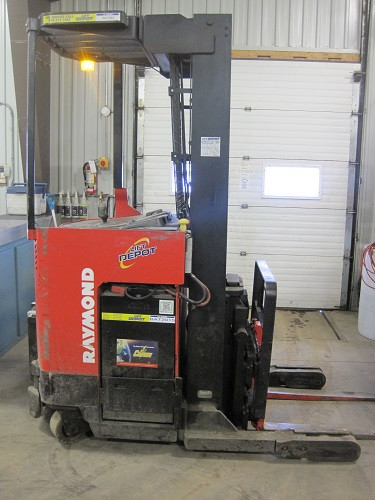
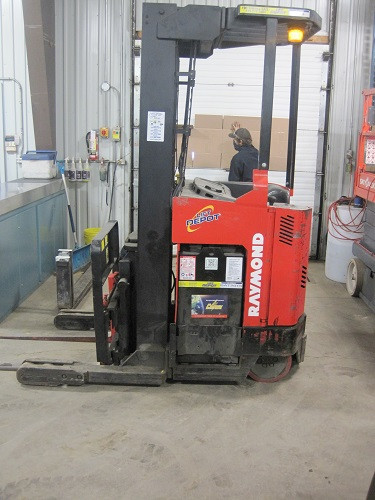
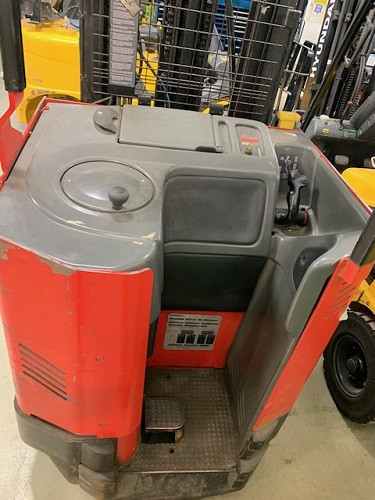
Caterpillar: Used Caterpillar Empty Container Handlers Vallejo - Types of forklifts: Choosing amongst electric, hybrid or internal combustion is a main consideration when buying a forklift. Every technology has its disadvantages and advantages. It is vital to distinguish one type of forklift from another and to choose the right kind for the application. The following information can help you to select the forklift that best fits your needs. A major advantage of electric is long-term cost savings. The first outlay to buy spare batteries can seem costly, but you save a lot of money by not having to buy fuel and bring it to the work site. If you use some type of alternative source of energy, like windmills or solar panels, you can save even more money. The disadvantage of electric is that changing out the batteries and downtime for charging the lift has to be considered. This technology continues to improve as new methods of utilizing electric technology advances. Variations on Forklifts: Stand-up rider forklifts - These electric-powered forklifts have counterbalance weights constructed into the body and are made so that the driver rides in the body of the truck. Stand-up, narrow aisle rider - Best for areas with tight spaces. Rather than having counterweight within its body, this electric forklift is designed with straddle legs on every side in order to provide stability. Sit-down rider - The counterbalance is located at the back of this sit-down rider. Motorized hand-pallet jacks - It is a low-lift truck which has forks and is designed so that the driver can stand on the back. Other models are designed to be walked. Reach forklift - This type of forklift has a boom for long reach. The forklift is made to be stable on uneven surfaces by having the outriggers at the front.
Wolff: Used Wolff Construction Cranes Vallejo - Hydraulic truck cranes are different from other crane models due to the way they particularly operate. Hydraulic cranes use oil instead as opposed to utilizing a winch in order to wind up cables to provide the lifting force. Since oil is a fluid that retains its volume, it is incompressible. Therefore, this means it is among the most ideal types of fluids for pushing pistons towards the direction the force is going to be exerted. The hydraulic pump creates a pressure that moves the piston. This action is maneuvered by the driver using the controls within his cab. Normally, hydraulic truck cranes make use of a pump that has 2 gears. The truck mounted crane can move from one location to another with little need for dismantling. The truck crane has one engine that could control both the crane and the truck. Other Components Boom Telescope: The boom telescope enables the boom to retract or extend thanks to hydraulics. Jib: The jib is a latticed structure which extends from the boom. Boom Swing: Boom swings have a large roller or ball attached to the carrier. It is able to swing 360 degrees in both directions. Hydraulic mechanisms provide swings at various speeds and control the swing in order to rotate the turntable gearbox. Outrigger: The outrigger is a unit which helps the crane maintain its balance by using hydraulics to lift the truck. Load Movement Indicator: The load movement indicator is lights which flash so as to warn the operator that maximum weight is approaching. Pump: The pump is the device responsible for steering the outrigger. Steel Cables: The steel cables are reinforced and run through the boom and the jib. They can generate up to 6350 kg or 14,000 lbs. Boom Elevation: The crane's boom ascends using double hydraulic cylinders which allow for raising and lowering materials. Rotex Gear: The rotex gear is situated underneath the cab and operated by hydraulics. It allows the boom to swivel on this gear.
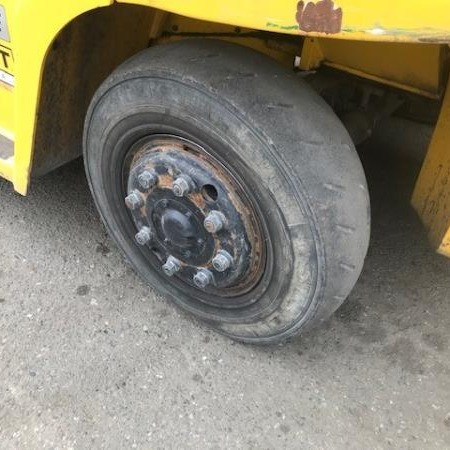
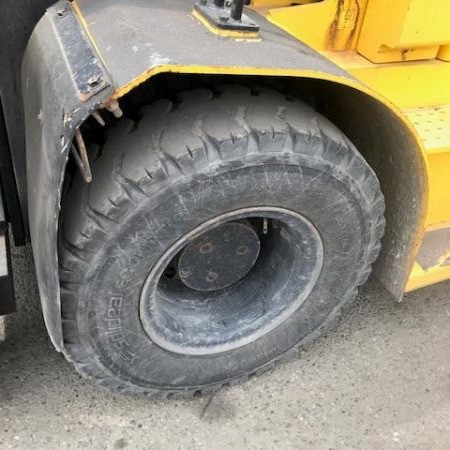
Toyota: Used Toyota Narrow Aisle Forklifts Vallejo - Tire Types Generally, cushion tires are solid tires which have no tread pattern. They are mostly made to be utilized on smooth and solid surfaces, normally indoors. There are tread patterns available though, which are a lot suitable for various surface environments. The cushion tires are popular on smooth warehouse floors and in similar applications. Pneumatic tires on the other hand will need air and are designed specifically for uneven ground and loose surfaces. The pneumatic tire provides a higher ground clearance over solid tires. This raises the center of gravity of the forklift and really lessens its rated lift capacity. Most often, pneumatic tires are utilized in rough terrain surroundings due to their ability to negotiate uneven surfaces in a smoother manner. Lots of mining or agricultural operations and construction sites rely on these tires so as to make sure the equipment could travel as safe and carefully as possible. Lift height and Lift Capacity It is important to understand the maximum weight and dimensions of the loads you would be handling in order to determine the capacity of the vehicle needed. Furthermore, you will need to know the maximum fork height required so as to stack or rack the loads. These factors, the lifting height as well as the load size, greatly affect the lift capacity of the truck. A larger size load could move the vehicle's center of gravity and change the load combination. This reduces the lifting capacity of the equipment as well as affects the height and the load being lifted. Using various types of attachments can also affect the truck's overall capacity. Mast Options There are a lot of different options of masts offered on the market. Like for instance, there are quad, triple, double or single, the numbers indicate how many sections or stages the mast has. In a variety of circumstances, you would not be needed to make any choices as the lift height will dictate the type of mast you would get, however, in trucks with really high lift heights, you could have an option.
TCM: Used TCM Warehouse Forklifts Vallejo - About sixty percent of the forklift market is made up from electric models. These models derive their power from really heavy lead-acid batteries. Because of their massive weight, these batteries naturally offer much of the counterweight. Counterbalanced trucks are classified by the ITA as Class 1 forklifts. Class 1 also includes other electric trucks made for general applications and stand-up counterbalanced trucks. Although the initial expense of an electric forklift is more than IC lift trucks, electric models are cheaper to use in the long run. This is because of their lower maintenance and fuel expenses. Most of the electric rider trucks manufactured and designed in North America are made for transporting material within 4 walls. Electric forklifts have traditionally been limited to indoor applications with surfaces that are clean and smooth. With the launch of some new Class 1 items, it is becoming more and more possible to utilize electric rider models in some outdoor applications. When compared to Internal Combustion forklifts, the electric trucks are usually selected for indoor applications due to the fact they produce no harmful emissions, could normally complete a full 8 hour shift on one battery charge and are really quiet to run. Electric model batteries weigh approximately 3,000 pounds. The job of reloading, recharging and removing the batteries could be burdensome and time consuming. This situation normally happens at a battery charging station or an area that is specifically utilized for handling batteries. There are evolving fast charging technologies that would be available on the market and these new systems are changing the battery charging process. The Proper Fit A main factor associated with any kind of lift truck is utilizing the right size of unit to do the specific application. The application itself must always dictate which product is selected. Customers are striving to find lessen operating expenses and more effective methods to lessen operating expenses, all the while increasing their overall production, specially as the economy becomes more complex and competitive. Using the wrong size of forklift can really slow things down and have a big impact on the bottom line and productivity of a business, while negatively affecting the production on the jobsite. If you are unsure about what particular type of forklift you need, a reputable dealer would be able to ask you the correct questions which will enable you to make a proper selection. Many dealerships provide rentals of their machinery as well and this is a really good way to try before you commit to such a large purchase. It is also a good way to try various units out to see which ones you and your operators are the most comfortable with and which ones bring you the best productivity.
Nissan: Used Nissan Pneumatic Tire Forklift Vallejo - What is the Difference between Pneumatic Tire and Cushion Tire? Amongst the most common questions regarding this type of machinery is knowing the distinction between cushion tire forklifts and pneumatic tire forklifts. Each tire type is specifically right for various needs. Like tires on a vehicle, pneumatic tires have air in them. These tires are suitable for indoor usage but they are most useful on uneven and gravel surfaces and in outdoor "yard" applications. Cushion tires are designed as a solid industrial tire that is used mainly for indoor operation. These tires can be used outdoors on asphalt surfaces only. If you do drive cushion tires outdoors, there is an alternative to get traction tires on the front of the machine. These are referred to as the drive tires. The back tires or the steer tires are particularly made for steering. Traction tires situated on the rear of the forklift will simply wear out faster. Therefore, if you do have to work outdoors, having traction on the front and the smooth tires on the back will be the most economical and safest way to operate. What is the distinction between Solid Pneumatic and Air Pneumatic tires? It could be quite difficult when trying to know the main difference between the two kinds of tires. They would operate well in both in asphalt and gravel conditions. The main difference between the two tire types is solid pneumatics are made of solid rubber. This means they are durable and you cannot puncture, pop or gouge them. These tires are more expensive than air pneumatic tires because they are made up of way more rubber. These tires are best suited for places like lumber yards and scrap yards where there could be plenty of sharp things and debris on the ground. The pneumatic tire can be punctured accidentally. You can get flat tires from them when this happens. Prior to using a forklift with air pneumatic tires, be sure that the yard is free of nails, scrap debris and sharp metals and by inspecting your work area. In the majority of applications, standard air pneumatic tires function great.
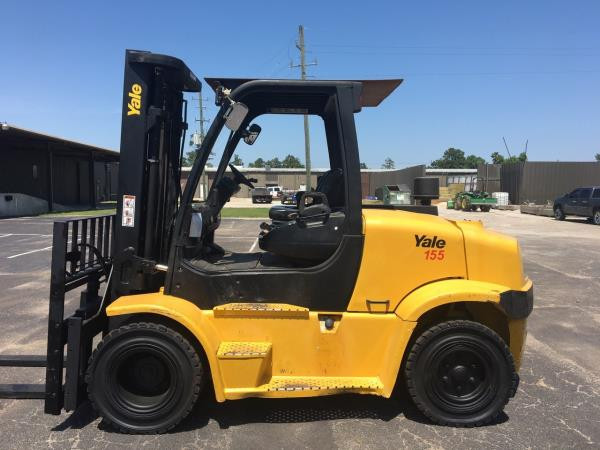
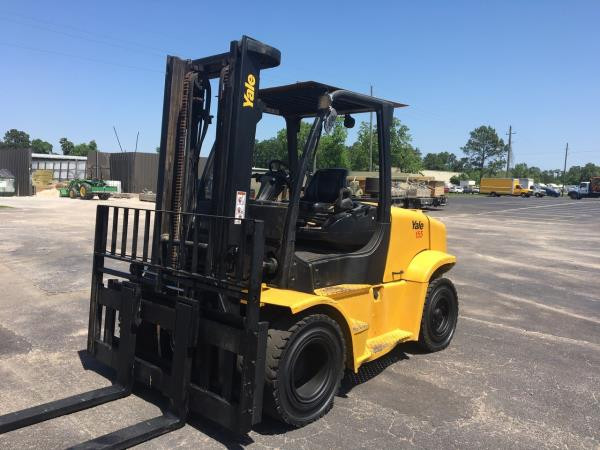
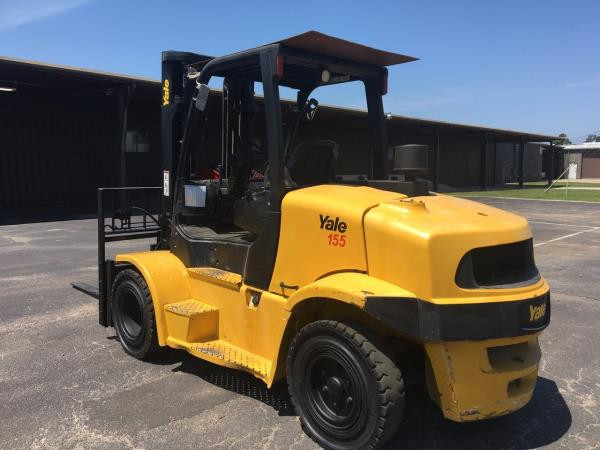
Yale: Used Yale Counterbalance Forklifts Vallejo - Counterbalanced Trucks: The rider truck is a sit down forklift referred to as a counterbalanced forklift. The counterbalance forklift has been manufactured in electric and internal combustion units. The forklift is a key equipment in most warehouse and distribution centers and are usually capable of lifting anywhere from 2500 to 12,000 lb. range depending on the particular unit. Counterbalanced trucks could raise cargo to heights of over 20 feet, depending on the truck's model and weight. One of the largest volume manufacturers of zero emissions electric forklifts is Yale in the North American market. The company is among the first adopters of control technology and energy efficient AC motor. The company's continued pursuit of better energy efficiency is affirmed by competitive testing. This testing proves that Yale's 5000 lb. electric rider product provides the best energy utilized per load moved or overall energy efficiency of any lift truck in its class in North America. The spark-ignited models manufactured by Yale already meet or surpass the industry standard requirements. Yale trucks have been rated amongst the lowest in exhaust emissions by CEPA and EPA testing reviews. Their diesels are becoming cleaner all the time because of ongoing development with diesel engine suppliers so as to meet Tier III standards. These equipment also proactively meet upcoming Tier IV standards. Yale has also engineered their IC products for extended service intervals in order to reduce changes in oil and reducing consumption of this nonrenewable energy source for their customers. The company has introduced and developed an electronically controlled and innovative transmission that greatly lessens tire and brake wear from their Internal Combustion Engine forklift customers. In regard to their electric trucks, the company has introduced a system which recaptures energy into the truck during braking and during the lowering of loads. This energy is then reused, lowering the overall energy consumption of the truck. Yale takes pride in lessening non-productive energy use throughout the vehicle by means of hydraulic system efficiency, weight reduction and drive train components, patent pending.
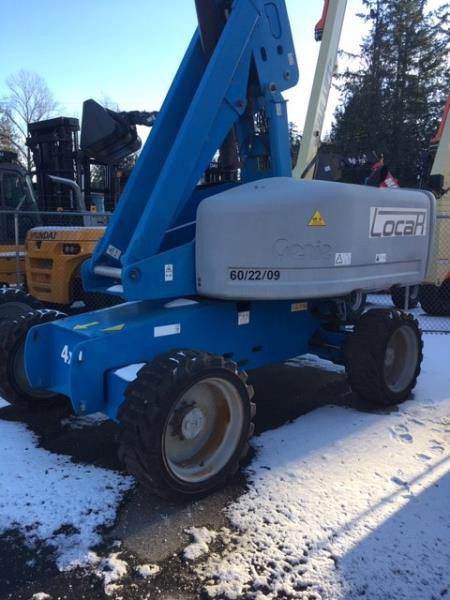
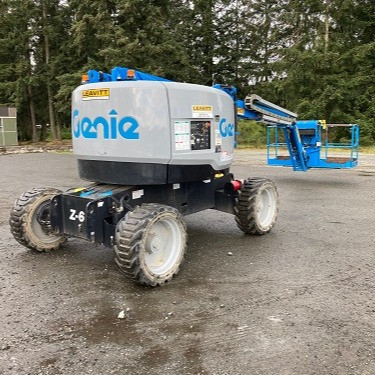
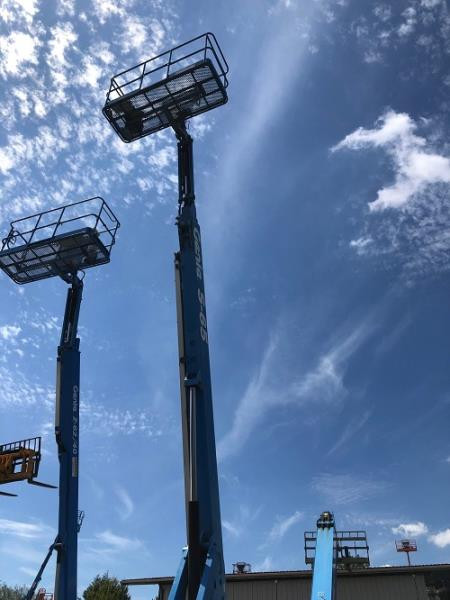
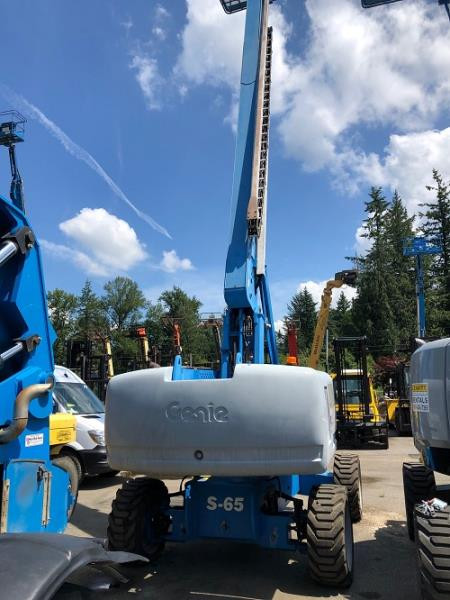
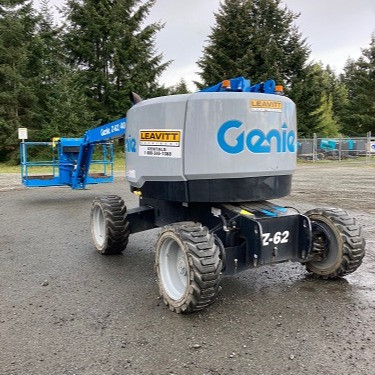
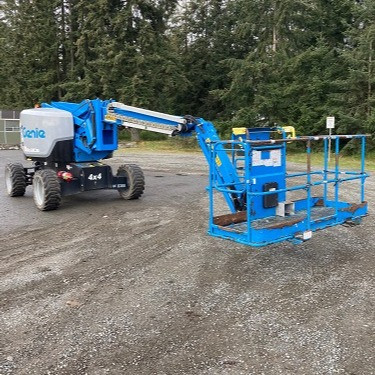
Genie: Used Genie Aerial Work Platforms Vallejo - Terex is a Global Supply Management Organization that is both well-known and trusted within the construction business. Terex is in constant search for suppliers that could make the highest quality manufacturing products. Through these means, Terex could continue providing opportunities for growth for our suppliers. Diversity has long been known as an essential element in providing optimal operational status. Partnering and developing relationships with various types of businesses like for example those kinds owned by females, veterans, minorities, disabled, and small businesses allows greater opportunity and communication to make excellent machinery and services which are priced competitively. Genie and Terex Machine Safety In order to guarantee the safety of the operators of Genie or Terex machine, there are several essential guidelines and rules that people can follow. Safety is a top priority and can normally be established through joint efforts of both employers and workers. Common sense is the first key because safe work practices must be applied all the time. If there is there any doubt regarding safety, the job should not be completed without the consultation with your employers and the appropriate safety guidelines. Compliance with employer, government and work site standards and rules will help increase worker safety. What's more, training should just be run by qualified individuals, and the equipment must never be operated by a person or employee that does not have the proper training or qualifications, if required. The operators instruction manual and any safety guidelines which are supplied with the machine should be available on the machinery all the time. Every equipment operator should read, understand, and follow the directions and safety rules provided in the operators instruction manual at all times. Do not hesitate to contact a representative if you have any questions regarding your Terex or Genie forklift.
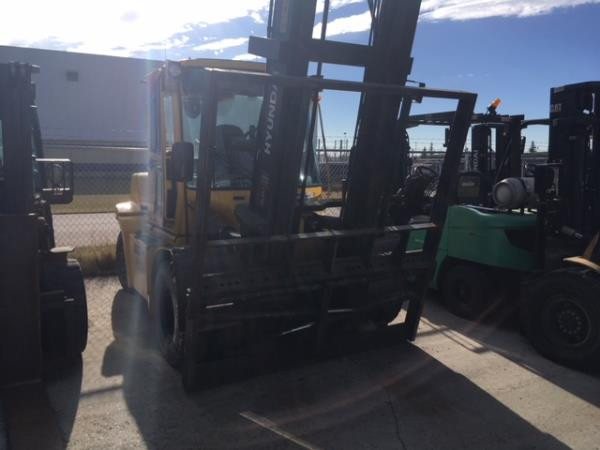
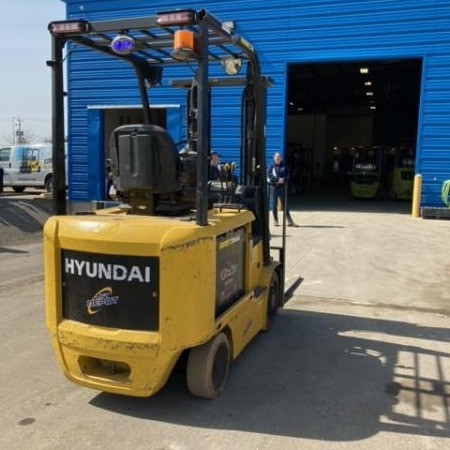
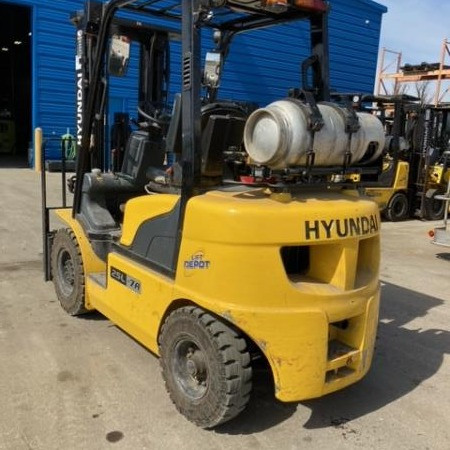
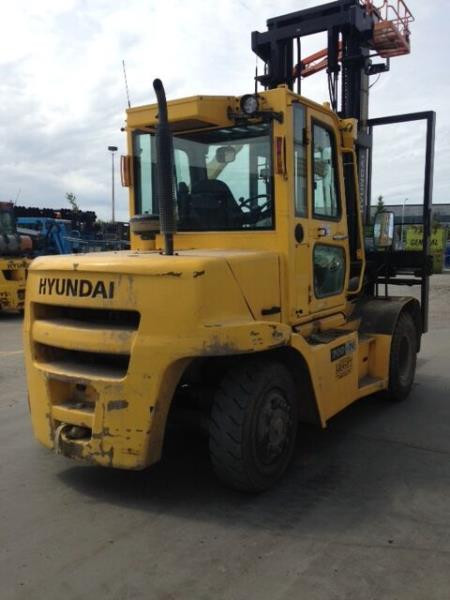
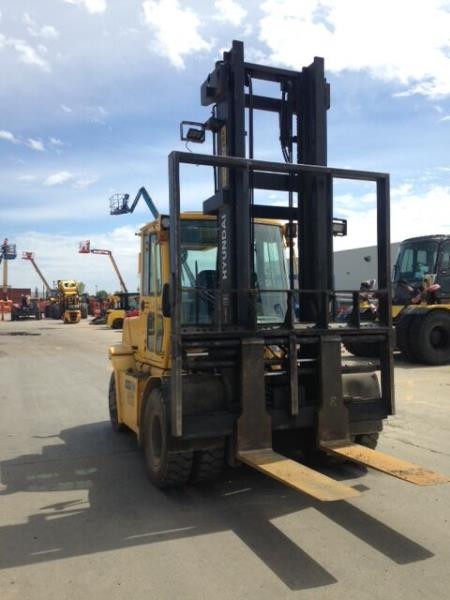
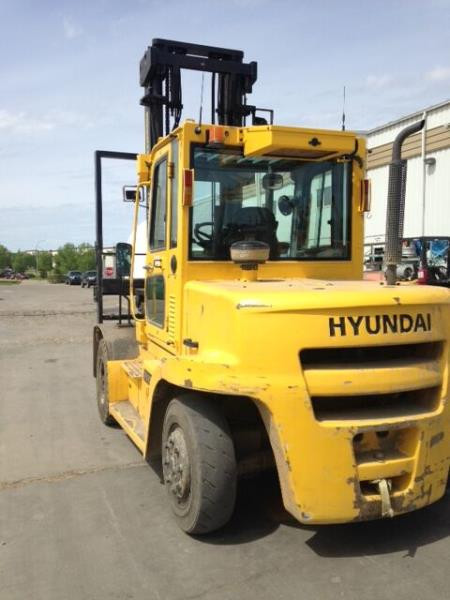
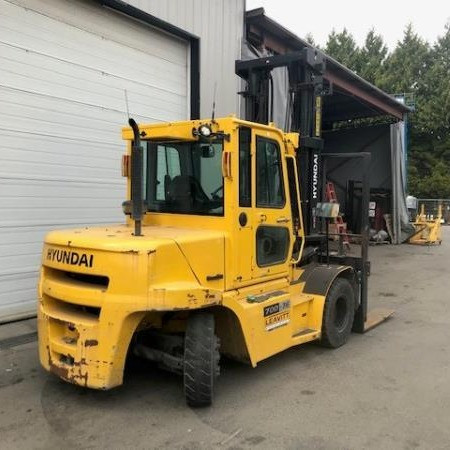
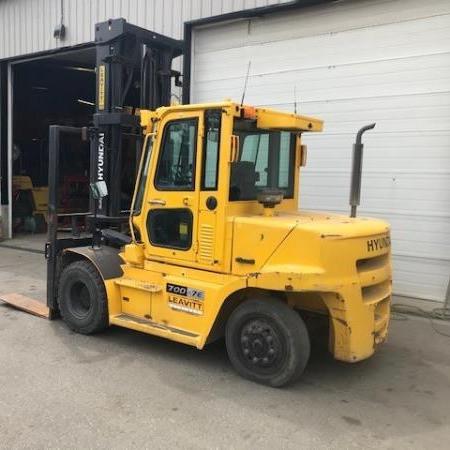
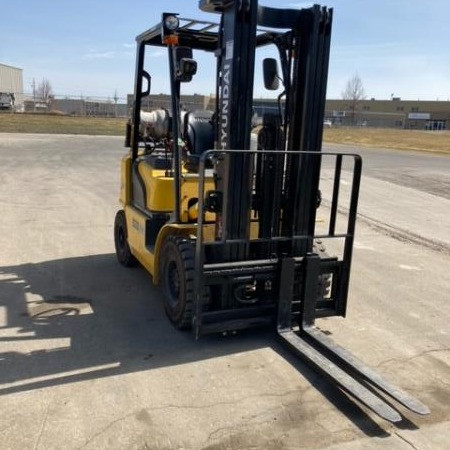
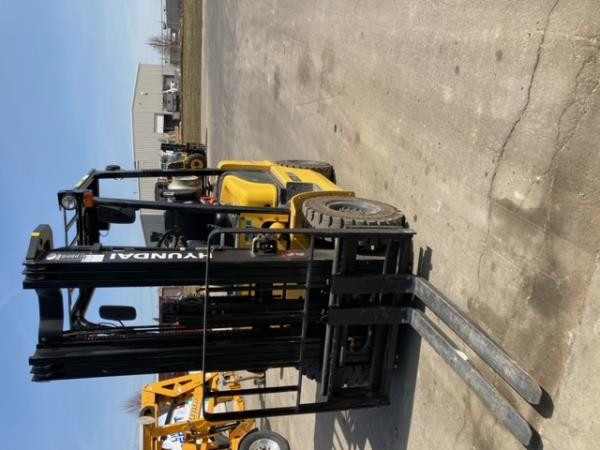
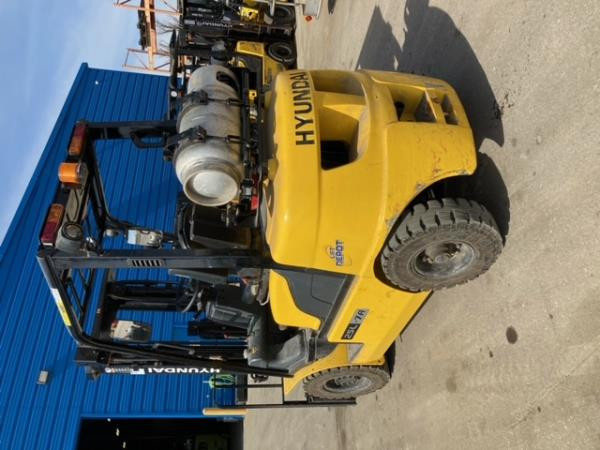
Hyundai: Used Hyundai Warehouse Forklifts Vallejo - Warehouse Forklift Types The kind of multi-purpose equipment that can be used both indoors and outdoors are forklifts. They are capable of working on rough terrain and are a common piece of industrial equipment found on construction sites or inside warehouses. Any warehouse forklift usually just needs to be utilized on flat surfaces for most of their work scopes. There are different classes of forklifts. Lower classes of forklifts are used inside warehouses and higher classes are considered to be sturdier and used more frequently in outdoor operation. Classes of Forklifts There are 4 kinds of warehouse forklift types out of the 7 forklift classes. The classes 5 to 7 typically describe forklifts which are utilized to tow heavy loads or operate outside on rough surfaces. Classes 1 to 3 are great for indoor application since they use electric propulsion. Class 4 forklifts rely on internal combustion or IC power. These kinds of forklifts could be used indoors but due to the fumes they make, are better suited for open air warehouse applications. You will seldom find these models in strictly indoor setting. Class One Forklifts Class 1 forklifts could be divided into 4 subcategories or lift codes. The lift codes are described as six, five, four and one. The operator of the forklift stands up in a lift code 1 forklift. In lift codes 4 through 6, the forklift operator sits down. To be able to differentiate between the latter three, lift code 4 forklifts have 3 wheels, whereas lift code 5 forklifts have cushion tires. Lift code 6 forklifts utilize pneumatic tires. Narrow aisle forklifts are a term for class 2 forklifts. These types of forklifts are operated by a standing rider and utilized in tight spaces. They are perfect for spaces which are very small for a sit-down rider forklift. Class 3 forklifts or electric hand trucks could also fit into tighter spaces. The operator for class 3 either walks behind the machine or stands, depending on the particular type of forklift. Lift models can lift pallets and loads several feet off of the ground. Electrical Forklifts Usually, electrical forklifts are used in warehouses as opposed to IC or internal combustion engine forklifts. There are several advantages and disadvantages to utilizing electrical models. To start with, they could last longer and are environmentally friendly. They cost less to run and cut down significantly on noise pollution. On the downside, they are more expensive up front, do not function well outdoors in bad weather conditions and nearly all models require charging every 6 hours. For obvious reasons, electrical-powered forklifts are a great alternative for indoor areas and warehouses most of the time.
Jungheinrich: Used Jungheinrich Lift Truck Vallejo - Jungheinrich diesel/gas lift trucks are made with a wide range of choices including payload capacities ranging from 1,600 kg to 9,000 kg and drive systems like hydro-static and hydro-dynamic drives. Jungheinrich reach trucks give the right solution for your specific lifting height requirements. Lifting heights reach up to 12,020 mm with the Series 3 trucks, the especially quick Series 2 vehicles, the compact Series 1 vehicles, the indoor/outdoor C Series and the Q Series multi-directional reach trucks. Jungheinrich order pickers provide reach heights of up to 10,390 mm. These products maximize efficiency by allowing the highest possible number of picks per hour. The range of possibilities comprises the Series 1 and 2 ECE horizontal order pickers and the Series 1 and 3 EKS vertical order pickers. Jungheinrich tow tractors are designed for towing any type of trailer due to their wide range of couplings. The tow tractors are particularly great for small train supply with trailer payloads of as much as 7,000 kilograms. The optimum solutions for all high-rack systems with stacking heights of up to 14,570 mm are the EFX, ETX and EKX stackers. Check out the EKX, a "man-up" very narrow aisle stacker, for example. This particular stacker allows the operator to slot-in and retrieve whole pallets as well as stack individual items. Jungheinrich offers electric models for its counterbalance trucks, pedestrian stackers and order pickers. Chargers and batteries are available for all these electric trucks. Jungheinrich maintains a well-coordinated supply and service system guaranteeing long term cost efficiency and dependability. Jungheinrich deploys more than 3,500 service engineers within its locations within Europe, each of whom really knows Jungheinrich equipment like no one else.
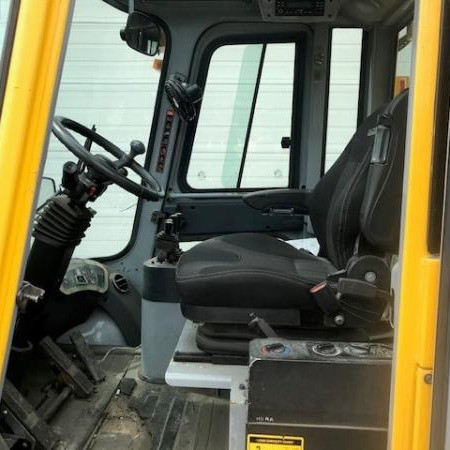
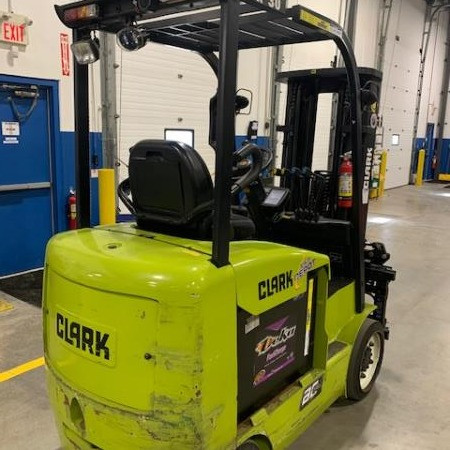
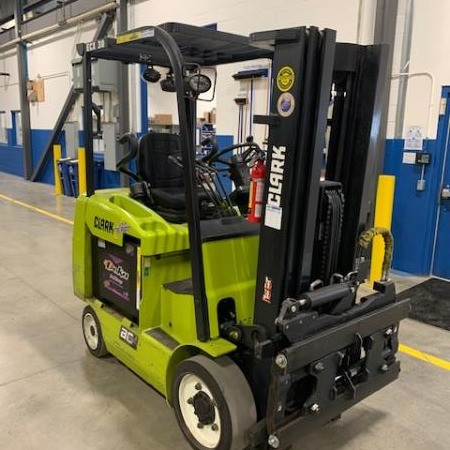
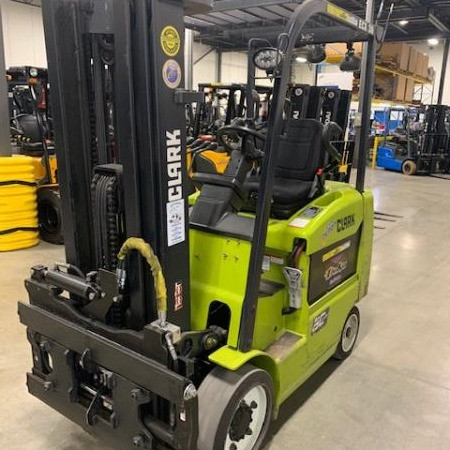
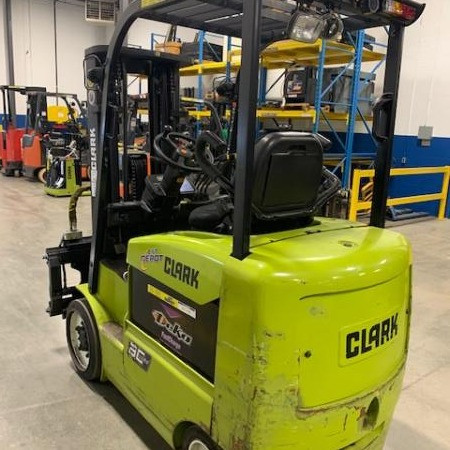
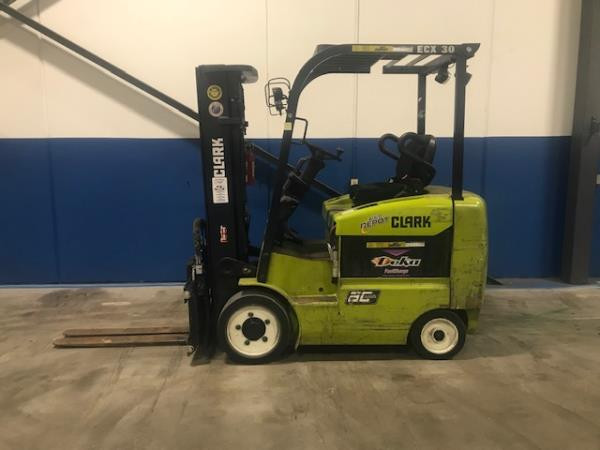
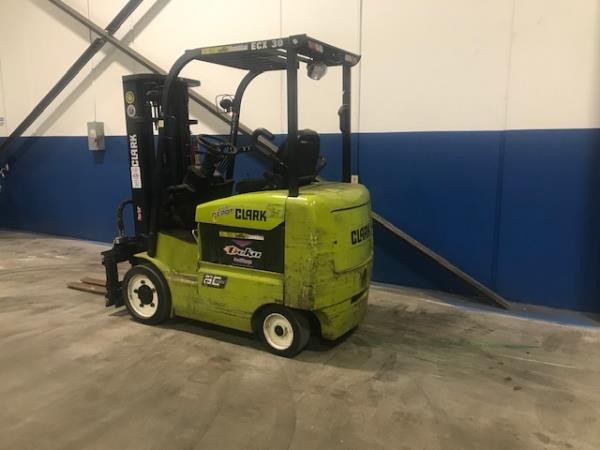
Clark: Used Clark Counterbalance Forklifts Vallejo - A type of equipment in the material handling business which could be used to lift and move loads from one location to another is referred to as a forklift. Each component of a forklift has a specific function. Different components could be utilized to move the load either horizontally or vertically. Mast The parts utilized to lower and lift the load is called the forklift mast. There are different kinds of masts used for lifting loads to various heights: quad, simplex, duplex and triplex. Power Supply There are four different ways you could power a forklift: gas, electric, diesel and propane. The battery is situated inside the cab beneath the seat. The propane tank is situated on the rear of the truck. The fuel tank on gas and diesel forklifts is beneath the back of the truck. Cab The forklift cab is located within the middle of the truck. This is where the operator sits and accesses all the informational gauges and controls. The steering wheel, gas pedal, brake, lifting controls and tilting controls are all situated in the cab. Frame Carrying all the biggest forklift parts is the truck frame. This includes the counterweights located at the rear that prevents the truck from tipping over when loaded. The frame consists of the overhead guard which protects the operator. The undercarriage holds the axles, wheels and driveshaft.
Kalmar: Used Kalmar Counterweight Forklifts Vallejo - Tips for Purchasing Forklift Components When you are thinking about buying components for your lift truck, there are some things you will benefit from knowing about. Some of the things, they may not tell you otherwise, so it is really a good idea to learn about what those tips are so that you could save yourself some time and money in the long-run. You should know the size of machine you would require, when you go looking for a machine. This would enable you to concentrate on your requirements and will save you wasted time spent on equipment which offer you less value. It is easy to guesstimate and accidentally jump the gun when you require a particular component, therefore, you should know what forklift model you have and what things it needs. There are many different locations to shop for forklift parts. Be sure to do some research in advance and know what your best alternatives are. Making time to compare prices in advance will prepare you for how much you are going to need to spend and get you ready to purchase the equipment and components. As replacement parts are normally quite expensive, compare some prices to see if which store offers the best cost. Forklifts are high maintenance equipment as they work hard each time they are being utilized. In order for the unit to work safely and efficiently, it is really important to purchase worn out and broken components as soon as they are discovered. Some people even shop on the World Wide Web and look for the best pricing and availability that way. There may be a variety of areas within your vicinity carrying these parts and pricing out ahead of time will save you from driving all around town. If you are unsure of what forklift components are required, find someone who specializes in your particular kind of machinery and allow them to teach you on what parts you need. Ask around with those in similar lines of business regarding where and whom they go to have maintenance completed and shop for components. If you have no body to speak with directly, you can always read where others go and look on blogs.
Skytrak: Used Skytrak Telescopic Forklift Vallejo - Cab Comfort SkyTrak has taken additional steps to improve their overall cab comfort. They provide a large interior to provide more space for the operator and 3-way adjustable suspension seating. With 4-Speed Modulated Transmission High performance, the axles experience increased agility. The 3 steering modes, 4-wheel and 2-wheel steering and crab steering modes could be changed as needed over varying terrain. Simple Controls The equipment could be quite easy to use due to the operator-friendly controls and cable operated joystick. The Stabil-Trak System provides fully automatic, rear axle stabilization that increases for increased stability from a 3-point to a 4-point stance. Versatile Attachments There is a wide array of attachments to pick from, in order to maintain a high level of productivity. Some of the main options include a fork-mounted work platform and a truss boom. Hardworking Telehandlers for a Hard Day's Work Regardless of whether you are moving pallets of block or placing squares of lumber or carrying heavy drywall stacks, SkyTrak effectively delivers the power you need so as to handle the most difficult tasks. A combination of high performance axles, a heavy-duty Cummins engine and a 4-speed modulated transmission give you the injection of power you need to increase mobility and productivity. Outfitted with multi-function capability, a cable-operated joystick offers the operator a better ease of operation. Low Maintenance These telehandlers are made to perform excellent and last in the most difficult settings. There is a rigid box steel frame construction at the base of every SkyTrak machinery. The business is recognized for having less total operating costs and more resale values as opposed to other brands. The sealed bearings, in addition to rear-mounted engine and parts which are sensibly located help to keep your equipment extend service intervals and out of the shop. Combining Comfort with Efficiency The operator-friendly cab has been designed ergonomically with comfort in mind. The adjustable suspension allows the operator to be comfortable for the duration of a whole shift. The operator's efficiency was taken into account when the easy-to-use controls were implemented and the cab interior was designed to be more functional. Like for example, a cable-operated joystick was installed along with multi-function controls to offer better ease of use. Come into the seat of the operator and get ready to work in comfort for the whole shift.
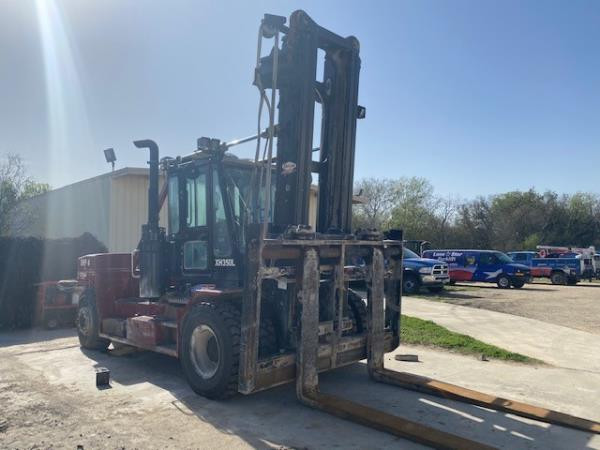
Taylor: Used Taylor Rough Terrain Forklift Vallejo - Rough Terrain Forklift Training Rough terrain or Class VII lift trucks are normally used in forestry and logging projects and are common on construction sites. They are the popular option for outdoor settings that depend on a machinery to run on uneven ground. The OSHA or Occupational Safety and Health Administration states that drivers have to receive lecture or classroom style training in addition to supervised driving training. Periodic refresher training programs must be taken by the drivers so as to keep them in top form. Classroom or Lecture Training When learning to operate a rough terrain lift truck, the initial step is taking lecture or classroom type of instruction. This training consists of information about the machinery which the operator will be utilizing. Specifics like lifting capacities and how to refuel the forklift are discussed. Safety tips are important to understand prior to operation. OSHA does not place a minimum time requirement on classroom training, however, they do state that oral and written exams could be part of the training process. Supervised Driving Supervised driving is the next step in the rough terrain lift truck training, quite like when drivers learn to operate a passenger car. The driver needs to learn how to drive the specific kind of rough terrain lift truck that they would operate in the workplace. Additionally, they need to practice operating this forklift in an environment that closely replicates the conditions in which they will be driving. Some of the other situations covered in training include dealing with vehicle traffic, pedestrians and nearby structures. Certification The supervisor could certify the operator for that workplace after a supervisor determines whether a driver is capable of safely driving a rough terrain forklift. The certification for the driver could be kept in their personnel file. If the training is to be taken in a 3rd party training facility, the trainer hands the driver the certification. Since work environments vary, the certifications are not transferable; thus, operators should be re-certified again in the new environment. Usually, training passes faster after the operator has been certified the first time. There are a few extremely essential safety concerns associated with driving a lift truck. Operators have to stay alert and able to drive with the utmost care and attention. Practicing good habits could actually save lives at the end of the day. Moreover, much less damage to the merchandise, the work environment or the equipment itself occurs when drivers are working at the top of their game.
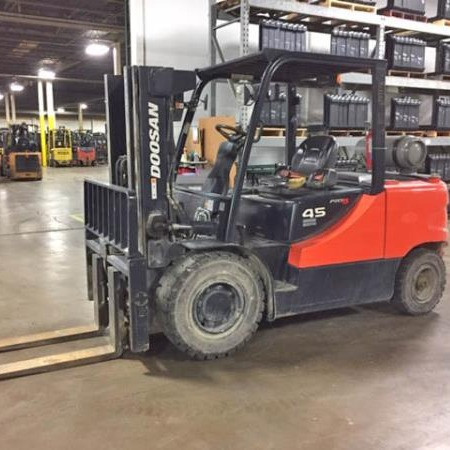
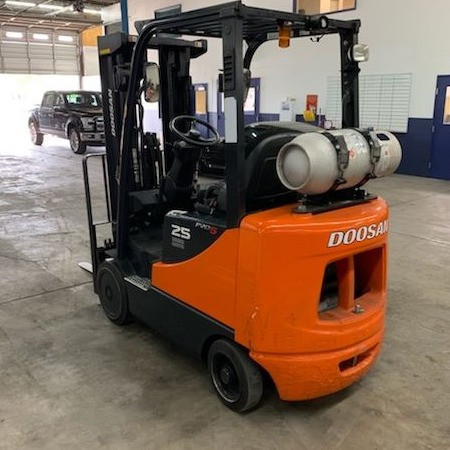
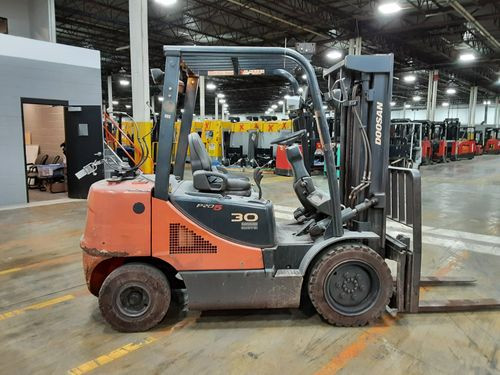
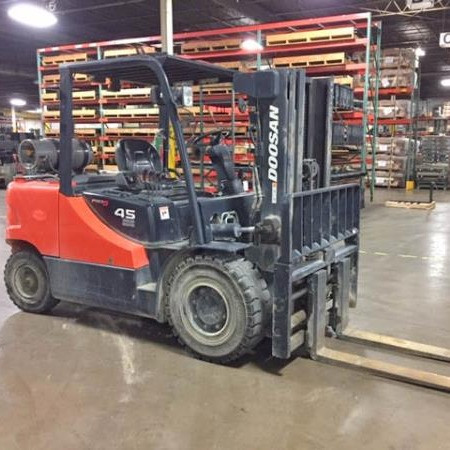
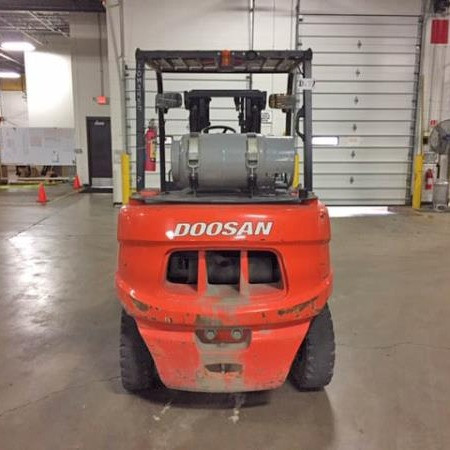
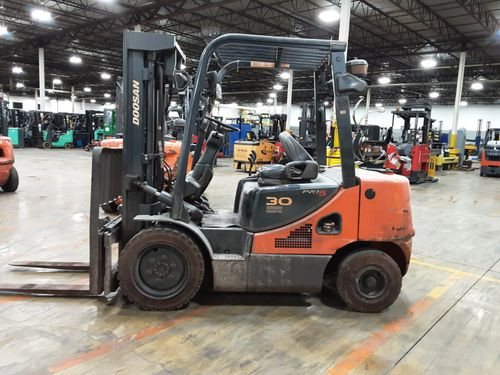
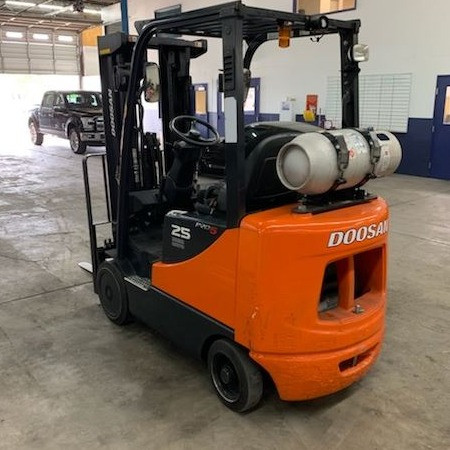
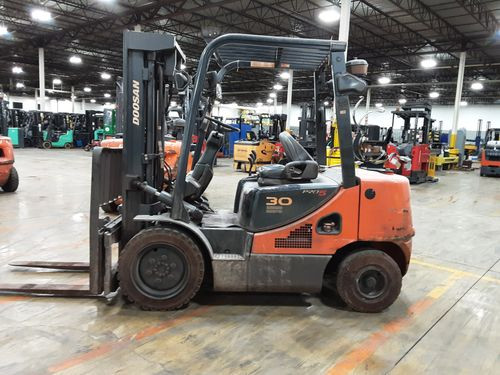
Doosan: Used Doosan Used Forklifts Vallejo - The materials handling company Doosan is a major manufacturer of machinery, with more than 100 forklift models made at many Doosan factories. Doosan is Korea's oldest business organization. Models consist of reach trucks and engine and electric forklift trucks. The Doosan name is associated with high quality equipment, offering operator comfort, convenience, performance and reliability. Doosan also manufactures environmentally friendly models that feature reduced gas emission and less noise and vibration. Korea's Oldest Enterprise Doosan has been around for 115 years, beginning in 1896 when it was known as Park Seung-jik Store, the first modern retail store in Korea. For more than a century it has continued to grow and change with the times. Doosan's history of dynamic change and modernization has ensured its position as an international ISB powerhouse. Doosan Infracore is a worldwide leader in the manufacturing of construction machinery. A top-quality machine maker, Doosan Infracore delivers business services and fabricates products in the fields of compact equipment, engines, machine tools, utility and attachments. Through continuous technology and quality enhancement, the company leads Doosan's ISB segment, strengthening market position and Doosan's overall product competitiveness. Doosan Infracore operates a broad international business network that includes a global dealer organization network. Situated in numerous places around the globe are local branches, sales subsidiaries, technical centers and parts centers. The company's factories in some European nations, Korea, as well as in China and the United States make a huge array of construction equipment and machine tools for a broad base of local clients. Within China, the company's whole excavator sales total remains the highest within the industry. We are the company of choice to fill Korean demand for excavators and machine tools. Doosan is engaged in ongoing expansion of global market share through the top-notch services, production of enhanced technologies and quality products. Our overall customer satisfaction has contributed to the increase in Doosan's global market shares. We are at the forefront of the US market for compact construction machines. We continue to grow our share of the heavy-duty construction machine industry in the US.
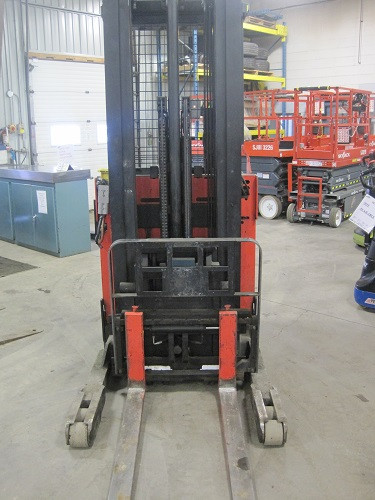
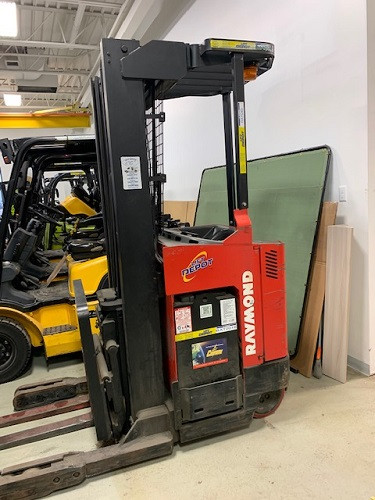
Raymond: Used Raymond Narrow Aisle Forklift Vallejo - Raymond consistently offers unparalleled experience to deliver solutions to the custom warehouse needs that push the material handling industry forward. In the supply chain industry, when it boils down to continually improving and becoming more efficient, the most demanding businesses know that the key to warehouse and distribution operations' success is due to efficient material handling. In order to keep improving their overall processes, the companies choose solutions from the material handling solution providers at Raymond. This company knows better than other businesses that the process of material handling is much more involved than only "handling materials." Our Strategic Approach Raymond has been designing, making and distributing a wide ranging portfolio of excellent lift trucks. Throughout the long process, they have strategically spent many hours analyzing all types of options in order to streamline their machines and provide their customers with the best available features and innovative ideas. Raymond is happy to offer the material handling solutions which retailers and department stores need to be able to go forward. The customer demands have to be met quickly in the really competitive Retail and Development Store business. There are a variety of seasonal demand swings which are involved in managing very thin margins. Raymond is proud to be able to solve a lot of the difficulties which the retailers face when working within the supply chain, especially within distribution center environments and brick and mortar stores. Raymond offers a dedicated Sales and Service Center network of friendly professionals who tirelessly serve their customers and find solutions. They could help with renting and leasing options. They have expert employees available to make sure you could order any needed parts efficiently and easily. They are experts in helping you determine the right-size fleet to suit your applications and optimizing warehouse space. Vital to the success of any retailer is to overcome any challenges. This is specially what Raymond's expert material handling solutions provide.
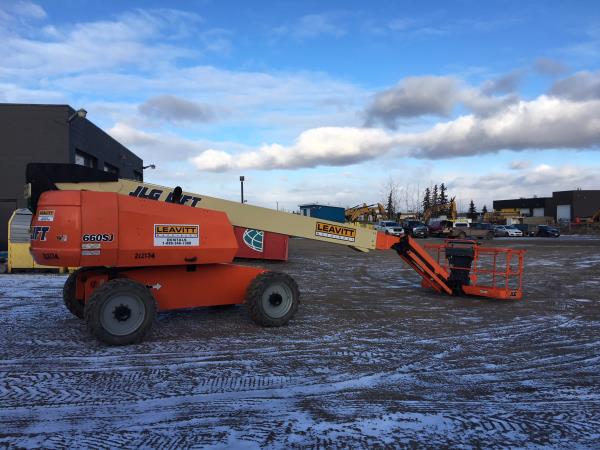
Haulotte: Used Haulotte Straight Man Lifts Vallejo - There are many kinds of articulating lifts. The variety is fairly extensive. There is a man lift designed pretty much for every different kind of application. There are some articulating booms on the market that can pivot 360 degrees. Some lifts are designed to be built to mount onto a trailer, onto the back of a pickup truck or other flatbed trucks. Several models are self-propelled and controlled by the operator. Other manufactures make lifts to deal with underground tunnels and dangerous settings like for instance grain-processing facilities and petro-chemical plants. These specialized lifts can work in a place where there is a risk of dust particles or explosive gases in regular operations. How to Utilize the Manlift A manlift is a specialized type of machine utilized to hoist an individual on a platform to reach a high up area. These types of machinery are used for instance to lift a construction worker who is trying to reach a building's second level. These kinds of industrial equipment can be really useful for doing jobs that are out of reach. As with any type of machine, the safety risks must be taken into consideration. Proper training has to be completed prior to using the lift. It is a much greater possibility for an accident to likely occur if the training has not been performed correctly. Any ignorance on how to utilize the machine properly can be very dangerous for both the driver and anybody in the nearby vicinity. The lift should be utilized on surfaces that are level to keep it from accidentally tipping and falling over. Steep slopes must be avoided which exceed any limits specified by the manufacturer. For additional safety, it is recommended that the brakes are set, even if the machinery is resting on a level slope.
Komatsu: Used Komatsu Gas Forklifts Vallejo - Forklift Operation - Maintaining the Stability Triangle Among the important basic discussions with lift trucks is taking into account the stability triangle and the center of gravity. Among the hardest things for an operator of a lift truck to judge is the importance of maintaining their center of gravity in their stability triangle. The Stability Triangle In order to describe it simply, a forklift has a 3-point suspension system. When imaginary lines are drawn between these three points, the stability triangle is formed. The operator should ensure that the center of gravity, which is created, combined with the machine and his load, remains within the stability triangle to be able to prevent the forklift from losing balance and tipping over. Centers of Gravity How do you define the center of gravity? When in regards to utilizing a lift truck, we must be concerned not just with the center of gravity of the load being lifted but as well with the combined center of gravity. This comprises the lift truck as well as the load it is picking up. The load's center of gravity is defined as the load center. The load center can be more easily detected in a uniform load situation, such as a bale. Like for instance, a uniform load on a 48 inch long pallet, will have the load center at 24 inches. This is a common load center for lots of smaller capacity lift trucks. However, if a load is not centered correctly, such as with non-symmetrical things, maybe an engine for example, then great care and caution have to be taken in order to estimate the center of gravity. Moreover, the lift truck has a center of gravity of its own. This shifts each time the lift truck carries a load. Once the load is lifted, the center of gravity moves forward. Care should be taken in order to maintain the center of gravity in the forklift's stability triangle. This occurs by following the numbers and not lifting more than the maximum allowable, given the center of the load. Also, the load center should be taken into consideration. Be aware that whenever raising the load, the load center also moves forward. The operator and everyone else who works close-by or in the nearby vicinity, could stay much safer if the center of gravity is maintained and the stability triangle is respected. This would truly ensure a balanced machinery, balanced loads and safer for everyone.
Case: Used Case 4 Wheel Drive Forklift Vallejo - During 1842, Inventor Jerome Increase Case established Case within Racine. He started building threshing machines. The business later gained international recognition as the initial builder of steam engines for its agricultural use. In time, the business grew to become the world's largest producers of steam engines. Case had established themselves in the construction machine business by the year 1912. They became a producer of road building machines including road graders and steam rollers. Case grew their construction machinery business through different acquisitions, starting with the American Tractor Corporation during the year 1957. Case had expanded their business by the middle part of the 1990s to become the leading producer of medium-sized to light-sized construction equipment. Case merged with the corporation New Holland in 1999 and together they became CNH Global. This corporation became responsible for advertising several of the globe's leading brands of agricultural and construction machinery. Case has been responsible for lots of industry firsts, while continuing to this day to take a role creating new products and solutions for the materials handling business. Currently, Case manufactures 15 lines of machines! They have designed and engineered more than 90 different units in order to effectively deal with your toughest construction challenges. In more than 150 countries, there are sales and manufacturing supported and Case serves the needs of all their clients all around the globe. Unrivaled Visibility - Within any forklift application, visibility is a crucial factor. Case lift trucks are engineered and designed with this in mind and they take pride in providing the best possible view for the worksite. Load Control - The G-Series by Case has 3 forklifts in its lineup that all offer load control. This feature provides smooth operation and minimal chain stress. These factors means reduced maintenance expenses at the end of the day. Operator Comfort - In a comfortable work setting, more work would be accomplished. Ideal seating choices and easy to use operator controls are key. Case has rough-terrain lift trucks that are reliable and powered with Tier III-certified 80 horsepower, 60kW Case Family Engines. This technology provides power to spare and will enable you to simply complete your workload. Statistics show that the more comfortable an operator is during their shift, with ergonomic controls and a functional working environment, the better performance they will have. Fast Lift Speed - The industry leading lift speeds on these remarkable machinery reach 32 m or 105 feet per minute by operator command. This important feature would allow you to remain productive in the most difficult material handling environments.
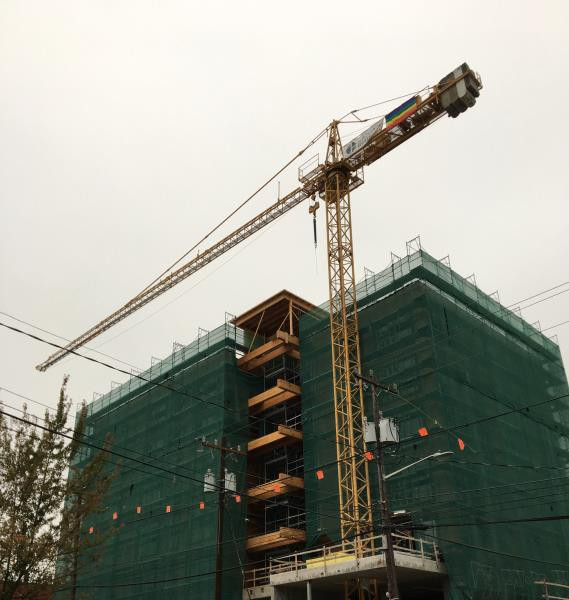
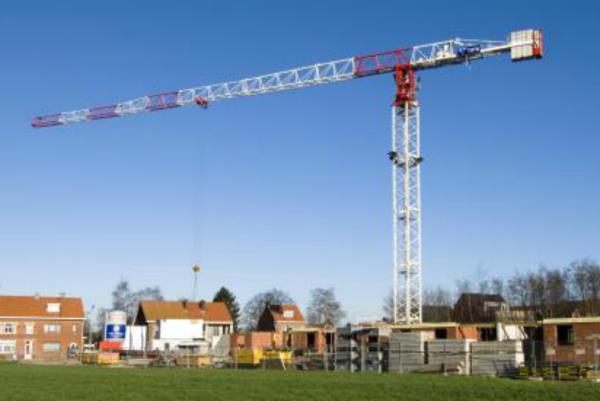
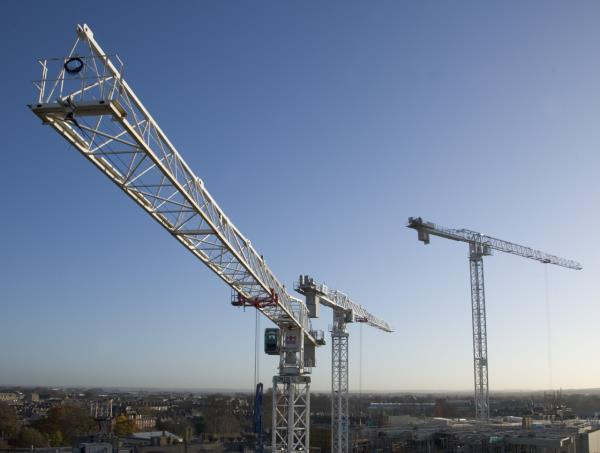
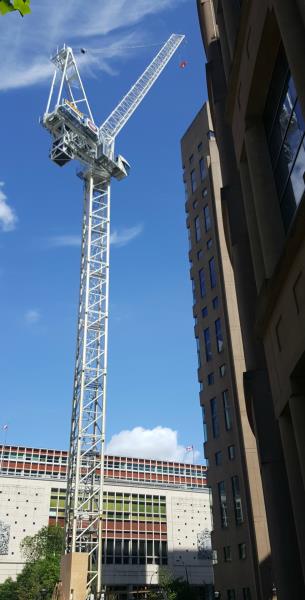
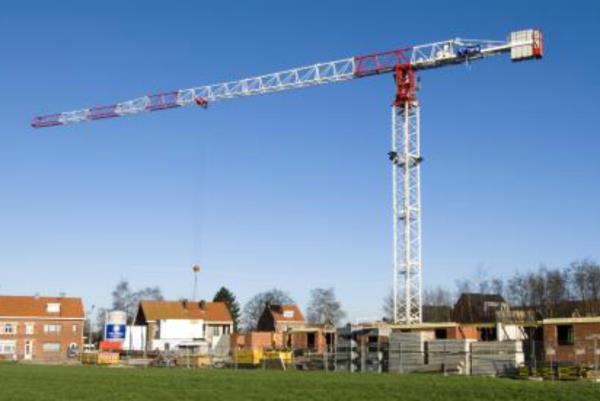
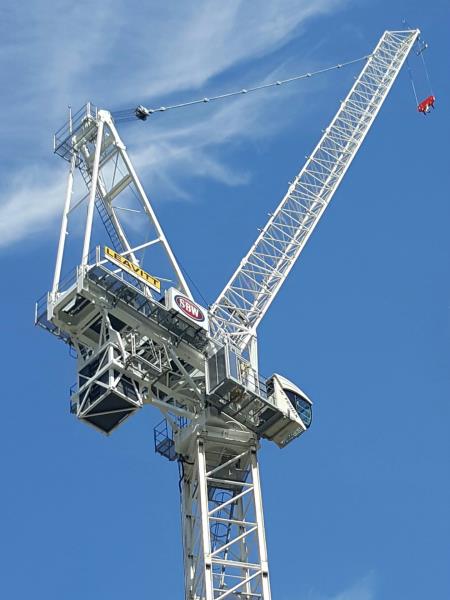
Potain: Used Potain Tower Cranes Vallejo - There are some industrial and commercial buildings that now exceed 60 stories or more. These buildings all require tall cranes to help transport the supplies to the upper floors. There are cranes that have their own vehicle attached or other types which are operated from the rear of trucks. Tower cranes are the largest kinds offered on the market. Tower cranes are stand-alone structures seen as part of a major city's downtown skyline on high-rise building projects. When new construction like skyscrapers or apartment buildings and commercial facilities such as shopping center are being built, odds are a crane will be on site. Types The two key kinds of cranes could be distinguished by the way in which their boom or jib raises supplies. The jib is the metal frame that extends from the main section. On a flat tower crane, the jib remains horizontal when it carries items. On a luffing type of tower crane, the jib can ratchet to downward or upward angles. The lifting capacity for both kinds can range from 30 pounds to 10,000 lbs. Body The crane's body is composed of a mast. This is a vertical steel frame which is a combination of separate parts. In order to increase the overall height of the machine, sections are added. The mast extends upward to where the desired height is, to the control module, which is a small room which has glass windows on all four sides or to the tower as it is also called. The driver of the crane works from inside of the tower. Lift The crane uses a braided metal cord to be able to lift materials. This cord extends out from a motor located near the control module to the end of the jib or boom. There is a pulley system situated at the end of the jib, through which the cord is positioned and lowered down. The jib which holds the cord becomes balanced by a counter jib situated on the opposite side of the tower. The counter jib has weights. These weights help to prevent the crane from toppling over when raising heavy materials.